
The 8 Mind Map Templates Worth Starting From
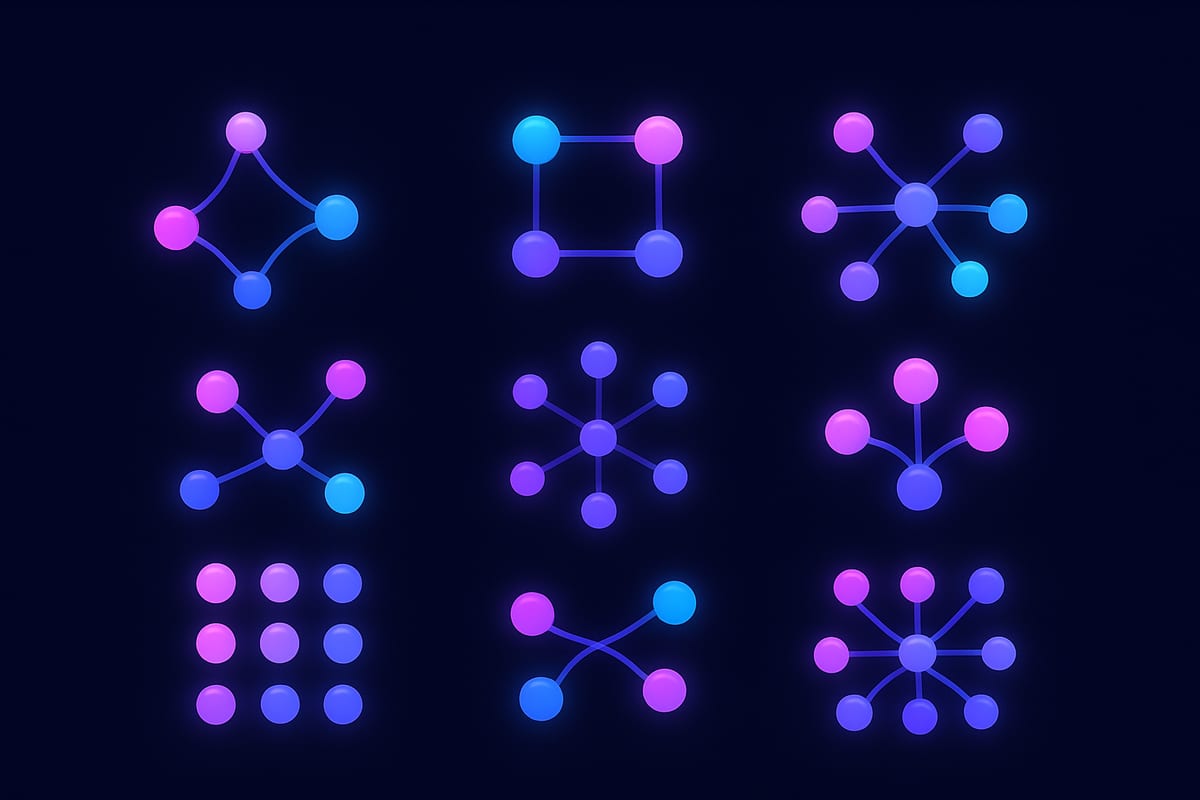
The blank-page problem is real. Staring at an empty canvas, you spend your first burst of energy not on thinking but on deciding how to start thinking. A template spends that energy for you. Here are the eight SquishyMind ships with, and the situation each one is built for.
1. Project plan
Phases as primary branches, tasks as children, dependencies as cross-links. Reach for it when you know the rough shape of a project but need to make it concrete and shareable. The spatial layout makes it instantly obvious which phase is overloaded and where the critical path runs.
2. Decision tree
A central question with branching yes/no paths and consequences at the leaves. Perfect for product calls, career forks, or any choice where you keep going in circles. Externalising the branches stops you from re-litigating the same fork in your head at 2am.
3. Second brain (PARA)
Projects, Areas, Resources, Archives — the backbone of a personal knowledge system. Use it as the home base for everything you’re tracking. It’s less a one-off map and more a living dashboard for your life and work.
4. Weekly review
Wins, in-progress, blocked, next week, and a small “how am I doing” corner. A Friday ritual that takes ten minutes and quietly compounds. Mapping the week beats listing it because you see the balance — too much red in “blocked,” nothing in “wins,” and the pattern tells you something.
5. Learning notes
A topic at the centre, sub-concepts branching out, with room to link across to related ideas. Built for the study workflow where you map from memory first, then fill gaps. Pairs naturally with importing your existing notes.
6. SWOT analysis
Strengths, Weaknesses, Opportunities, Threats — four quadrants, ready to fill. The classic strategy framework, made spatial so the relationships between, say, a weakness and a threat become visible instead of buried in two separate lists.
7. Meeting agenda
Topics as branches, talking points as children, decisions and action items as a distinct colour. Build it before the meeting, expand it live, and you walk out with a structured record instead of a wall of text nobody will reread.
8. Brainstorm dump
Deliberately unstructured — one central prompt and permission to go wild. This is the template for Stage 1 of any creative process: get everything out, judge nothing, organise later. It’s the one Squishy will most often suggest when she catches you staring at an empty brain.
A template isn’t a cage. It’s a running start. Delete what doesn’t fit, rename what does, and within a minute it’s your map, not ours.
Can’t decide? Ask the brain
Here’s the part that’s genuinely useful: you don’t have to choose from a gallery. Tell Squishy what you’re trying to do — “I need to plan a product launch” or “I’m trying to decide whether to switch jobs” — and she’ll suggest the right template and set it up for you. The fastest start is the one where you describe the problem and the canvas appears already shaped for it.
Browse the templates free → Pick one, or just tell the brain what you’re working on.