The SquishyMind blog
Thinking out loud about mind mapping, focus, neurodivergent-friendly workflows, and what happens when you give a mind map a voice.

From Chaos to Clarity: Using Tree View to Untangle Complex Decisions
Hard decisions feel impossible because you’re holding every branch in your head at once. Tree View puts them on the page, in order, where you can finally reason about them one at a time.
Read the article →
Color, Motion, and Memory: The Science Behind Why Visual Maps Stick
Mind maps aren’t just prettier than notes — they’re wired into how human memory actually works. Here’s the cognitive science of spatial memory, dual coding, and why colour and motion make things stick.

What’s Next for SquishyMind: The Features We’re Dreaming Up
We build in the open. Here’s an honest look at the ideas we’re dreaming up next — some close, some far, some maybe-never — and how your beta feedback decides which ones become real.

Table View: When Your Brainstorm Is Secretly a Spreadsheet
Not every map wants to be a sprawling canvas. Sometimes your brainstorm is secretly a list with attributes — and Table View turns it into fast, structured, editable rows without losing the map underneath.

Mind Mapping for Project Management: A Practical Guide
Gantt charts are great for tracking a plan and terrible for making one. Mind maps are where the plan is born — the scope, the dependencies, the unknowns. Here’s how to run a project from a map.

Why Playful Software Makes You More Productive, Not Less
There’s a stubborn belief that serious work requires serious-looking tools. The psychology says the opposite: play lowers the stakes, play sustains attention, and play is where your best thinking actually happens.

Outline View vs Canvas View: Two Brains, One Map
The same map can be a sprawling spatial canvas or a tidy collapsible outline. They’re not rivals — they’re two lenses on one structure, and knowing when to switch is a thinking skill in itself.

How to Organize Your Entire Digital Life With One Mind Map
Your digital life is scattered across a dozen apps, and the chaos has a cost you’ve stopped noticing. One master mind map — a home base, not another silo — can pull it back together. Here’s how to build it.

The 4 Views of a Mind Map: When to Use Canvas, Outline, Tree, or Table
The same idea has different natural shapes at different moments. SquishyMind gives you four views of one map — Canvas, Outline, Tree, and Table — and the real skill is knowing which lens fits the moment.

From Brain Dump to Structure: A Mind Mapping Workflow for Overwhelmed Minds
When everything feels urgent and nothing feels doable, the problem usually isn’t your to-do list — it’s that everything is still trapped in your head. Here’s a four-stage mind mapping workflow that gets it out and into a shape you can act on.

Why We Made Our Mind Mapping App Fun (And Why That’s Not Frivolous)
A wobbling node is not a serious feature. Except it turns out that the feeling a tool gives you is the single biggest factor in whether you actually open it again. Here’s why we spent real engineering effort making a mind map feel alive.

Real-Time Collaboration on a Mind Map: Why It Changes the Whole Exercise
A mind map you build alone is a thinking tool. A mind map a team builds together, live, is something else entirely — a shared brain that everyone can see forming in real time. Here’s what changes when the cursors come alive.

How Students Actually Use Mind Maps to Study Smarter
Highlighting feels productive and does almost nothing. Mind mapping feels like more work and does almost everything. Here’s the research-backed reason, plus a practical revision workflow students actually stick to.

Mind Mapping vs Note-Taking: When Each One Actually Wins
The “mind maps vs notes” debate is a false fight. They’re different tools for different jobs. Here’s how to tell which one a given situation actually needs — and how the best thinkers use both.
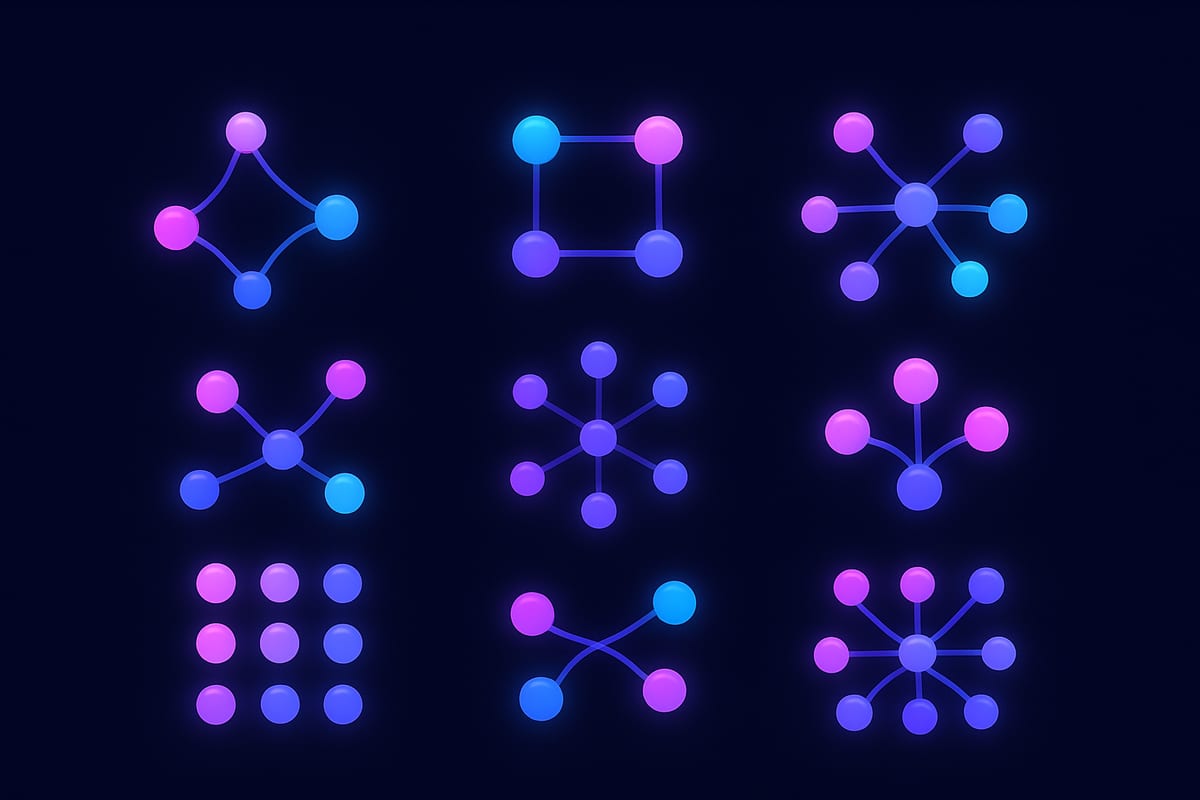
The 8 Mind Map Templates Worth Starting From
A blank canvas is freedom, and freedom is paralysing when you’re tired. A good template removes the first ten decisions so you can get to the actual thinking. Here are the eight we ship — and when each one earns its place.

SquishyMind vs MindMeister, Miro, and Obsidian: An Honest Comparison
We’re not going to pretend the alternatives are garbage. MindMeister, Miro, and Obsidian are all genuinely good at specific things. Here’s a fair breakdown of where each one wins, where SquishyMind wins, and how to pick.

Meet Squishy: The Voice AI That Actually Builds Your Mind Map
Plenty of apps have bolted a chatbot into a sidebar that can tell you about your data. Squishy is different in the way that matters: she takes actions on your canvas. Ask her to build a branch and a branch appears. This is the deep dive on the agent.

Mind Mapping for ADHD: Working With Your Brain Instead of Against It
Linear to-do lists are designed for a kind of brain that takes its working memory and prioritisation for granted. If yours doesn’t, mind mapping isn’t a nice-to-have — it’s a fundamentally better match for how you think.

Why Your Brain Doesn’t Think in Lists (And What to Do About It)
You don’t remember your life as a numbered list. You remember it as a web of connected things. So why do we keep forcing our messiest, most associative thinking into neat vertical columns? Here’s the case for mapping instead.
Read something useful?
Pass the SquishyMind blog to someone whose brain could use a squishier home.