Why Playful Software Makes You More Productive, Not Less

There’s a quiet puritanism in productivity culture: the belief that if a tool looks fun, it must not be serious — that real work demands grey, grim, frictional software, and anything delightful is a distraction in disguise. It’s a tidy story. It’s also wrong, and the psychology of how people actually think and create says so.
Play lowers the stakes of starting
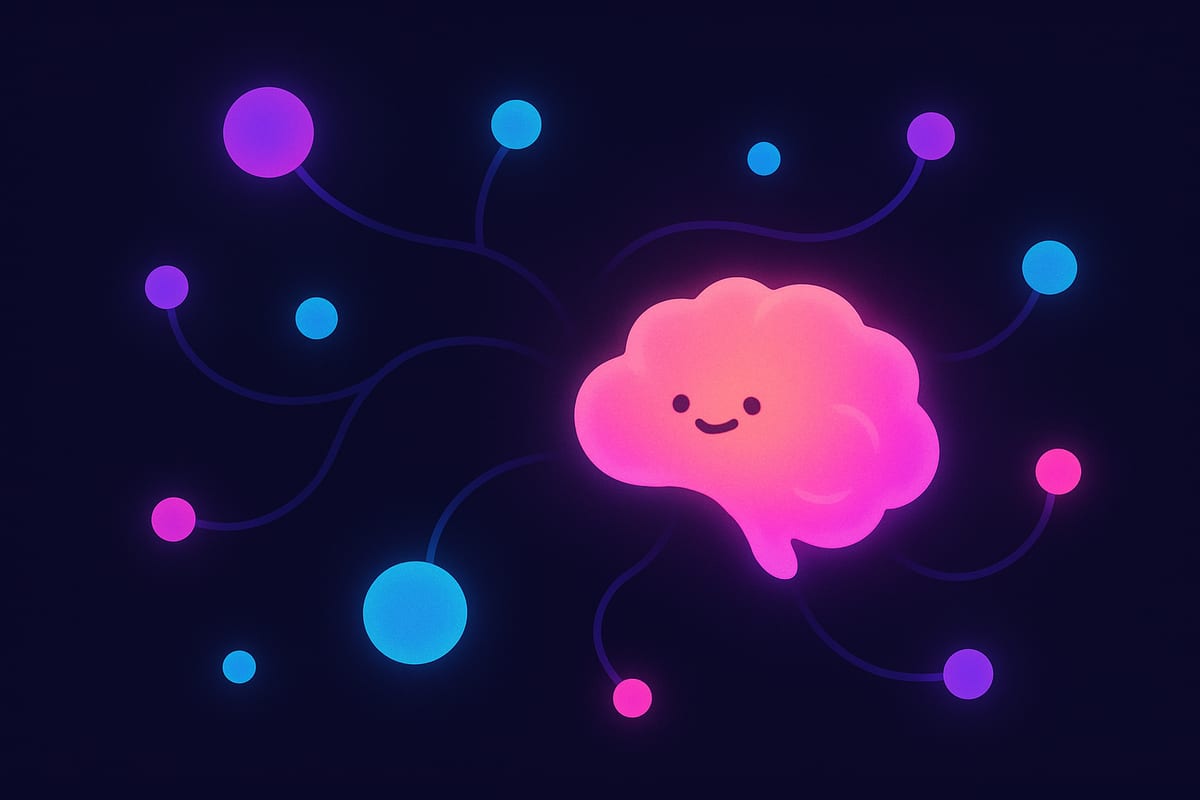
The hardest part of any creative or cognitive task is the blank page — the moment before you’ve committed anything, when everything you might do feels judged in advance. Playful tools defuse that. When the canvas wobbles a little, when there’s a friendly brain in the corner, when nothing about the interface feels like an exam, you put the first messy idea down sooner. And the first messy idea is the unlock for all the rest.
Play sustains attention
Attention isn’t infinite willpower; it’s heavily modulated by interest. Novelty, responsiveness, small moments of surprise — these keep the brain engaged, which is precisely why monotonous tools quietly drain you and you drift to a browser tab. A tool with personality holds attention longer, and attention is the raw material of every productive session. This is doubly true for anyone whose focus runs on interest rather than discipline — see our piece on mind mapping for ADHD.
Seriousness is about what you’re trying to accomplish, not about how grim your tools look while you do it. The most productive state — flow — is literally described as feeling like play.
Flow feels like play because it is
The most productive mental state we know of — flow, the deep, time-disappears absorption where your best work happens — is characterised by researchers in language that’s indistinguishable from play: intrinsic enjoyment, loss of self-consciousness, the activity feeling rewarding in itself. Tools that feel like play are tools that make flow easier to reach. Tools that feel like a chore push you the other way, into the shallow, effortful, easily-interrupted attention where little of value gets made.
The honest caveat
This isn’t a licence for gimmicks. Play that gets in the way of the work — confetti you have to dismiss, animations that slow you down — is just friction wearing a fun hat. The goal is delight that serves the work: motion that draws your eye to what matters, personality that makes a powerful feature approachable, responsiveness that keeps you in flow. Fun as a feature, not fun as a distraction.
That’s the line we try to walk with SquishyMind. The brain is charming so you’ll actually use the voice agent. The nodes move so your eye tracks structure. It’s playful on purpose, in service of getting more real thinking done — which is the whole point, and the opposite of frivolous.
We wrote more about the philosophy in why we made mind mapping fun. Or just come feel the difference → — it’s free during beta.